We use cookies to make your experience better. To comply with the new e-Privacy directive, we need to ask for your consent to set the cookies. Learn more.

From Tokyo, 1876: The Story of DNP and the Technology Behind Your Prints
April 21, 2026
World Creativity & Innovation Day — 21 April 2026
From Tokyo, 1876: The Story of DNP and the Technology Behind Your Prints
From a Tokyo print shop opened in 1876 to a globally recognised manufacturer of dye-sublimation photo media, Dai Nippon Printing has spent nearly a century and a half advancing its print technology. Here is the story behind the equipment we supply to photographic businesses across the UK.
On World Creativity and Innovation Day, we are looking beyond the product shelf and telling the story of the manufacturer behind it. Dai Nippon Printing is approaching a remarkable milestone: 150 years in print, with its anniversary arriving this October 2026. Understanding that history helps explain why DNP media and printers perform the way they do.
1876
Founded in Ginza, Tokyo
149
Years in operation — 150th anniversary Oct 2026
40,000+
Employees across 48 global production sites
1980s
Decade DNP began dye-sublimation media production
The History of Dai Nippon Printing
DNP traces its roots to a printing house called Shueisha, established in October 1876 in Tokyo's Ginza district. Japan was midway through its Meiji-era transformation, and Shueisha positioned itself at the centre of a country taking on new technologies at pace. Within eight years the company had installed steam-powered presses, a first for private enterprise in Japan.
A 1935 merger with Nisshin Print Co., Ltd. gave the business its present name: Dai Nippon Printing Co., Ltd., meaning Great Japan Printing. The decades that followed saw DNP expand well beyond publishing into packaging, electronics and business forms, building the manufacturing scale that would eventually take it into photographic print technology.

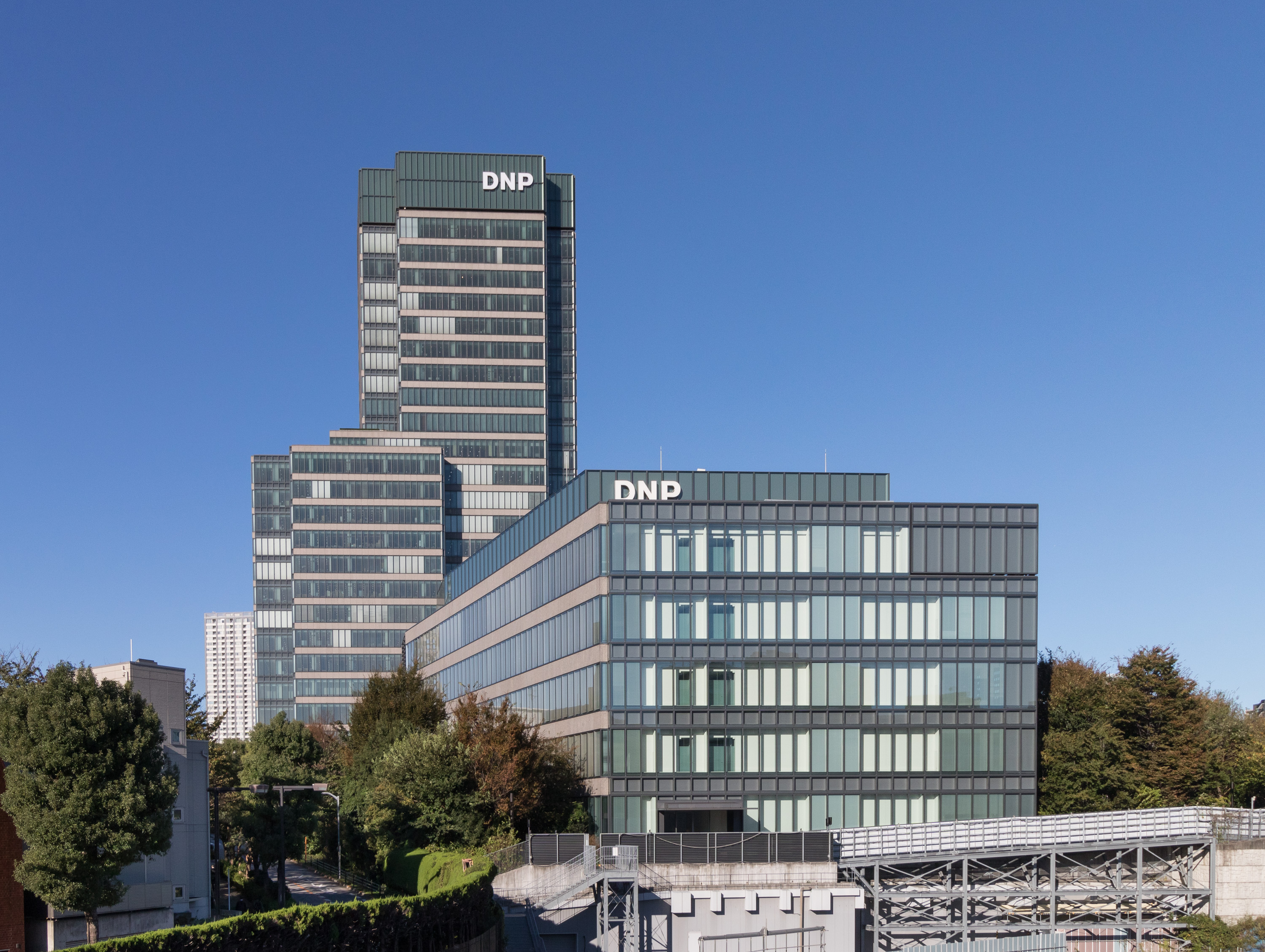
DNP headquarters, Tokyo — Wikimedia Commons, CC BY-SA 4.0
1876
Shueisha founded in Ginza, Tokyo. Japan's first full-scale modern printing company, producing books and magazines during the Meiji modernisation era.
1884
Steam-powered printing presses installed, the first private-sector use of steam technology in Japan's print industry.
1935
Shueisha merges with Nisshin Print Co., Ltd. and formally becomes Dai Nippon Printing Co., Ltd.
Early 1980s
DNP develops dye-sublimation thermal transfer printing media and begins production, among the earliest organisations anywhere to pursue this process for professional photographic applications.
1990
A dedicated Information Media Supplies division is established alongside a specialist R&D laboratory in Saitama, Japan.
Mid-1990s
DNP opens its first overseas dye-sublimation manufacturing plant in Malaysia and establishes its US subsidiary, DNP Imagingcomm America.
2008
DNP acquires Sony Chemicals' thermal transfer ribbon business, expanding its production capacity in thermal transfer media.
2012
DNP Imagingcomm Asia established in Malaysia as a 100%-owned manufacturing hub serving customers worldwide.
October 2026
DNP reaches its 150th anniversary, having spent nearly five generations in print.
What Is Dye-Sublimation Printing?
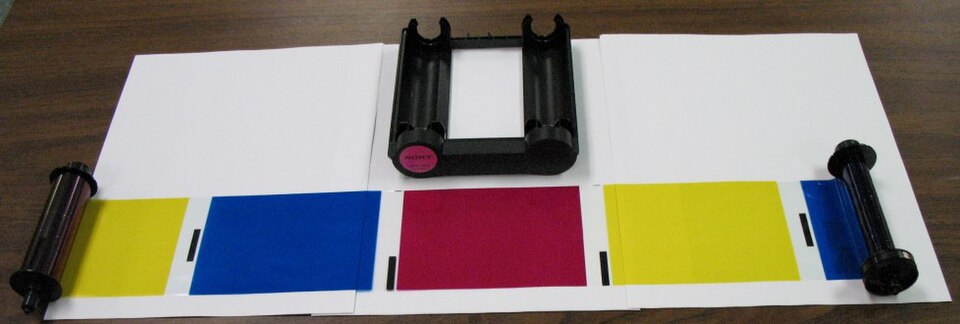
Dye-sublimation (also written dye-sub, or D2T2) is the process DNP has spent over four decades developing for professional photo output. A thermal print head applies heat to a ribbon carrying panels of cyan, magenta and yellow dye. At precisely calibrated temperatures, each dye transitions directly from solid to gas and diffuses into the surface of the receiver paper, bonding at a molecular level rather than sitting on top of it.
How does dye-sublimation differ from inkjet? Inkjet prints are built from discrete droplets of ink deposited onto a substrate and require drying time. Dye-sublimation produces a continuous wash of colour with no dot structure and no drying lag. Prints leave the printer dry and ready to hand to a client.
Colour depth and tonal gradation
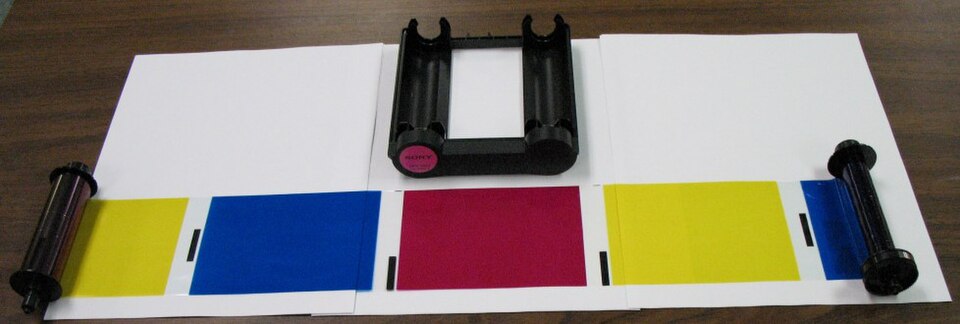
Dye-sublimation ribbon panels showing the three colour layers — Wikimedia Commons, CC BY-SA 3.0
Each colour channel operates across 256 intensity levels. Combined, cyan, magenta and yellow produce a colour gamut exceeding 16.7 million distinct shades. Because dye layers overlap and blend continuously, mid-tones and skin tones are rendered with smooth, dot-free gradation.
Protective overcoat
After the three colour passes, the printer applies a transparent overcoat in a final thermal pass. This layer provides resistance to UV exposure, moisture and fingerprints without any additional lamination step.
Why Professional Photographers Choose DNP
No drying time
Prints emerge dry and ready to handle, which matters in event and photo booth workflows.
Durable finish
The standard overcoat resists water, UV light and fingerprints without additional lamination.
16.7 million colours
256 intensity levels per channel delivers continuous-tone colour with no visible dot pattern.
End-to-end manufacturing
DNP produces both printers and media as a matched system, not assembled from separate suppliers.
Proprietary ICC profiles
DNP produces ICC profiles matched to specific media and printer combinations.
Predictable cost-per-print
High-yield media packs make DNP straightforward to factor into a studio or event operation.
DNP Media: Why the Manufacturer Makes All the Difference
DNP produces its own ribbons and receiver papers in dedicated manufacturing facilities, giving it direct control over the variables that affect print quality: dye chemistry, receiver coating and overcoat formulation.
When a DNP ribbon is used in a DNP printer, the print head and the receiver paper surface are engineered together. DNP generates dedicated ICC colour profiles for each media and printer combination, providing a calibrated starting point for colour-managed workflows.
FSC-certified packaging: DNP switched its media packaging from plastic to paper in May 2024. The media range carries FSC certification (C184961), with ribbon spools manufactured from recycled materials.
DNP Dye-Sublimation Printers: The European Range
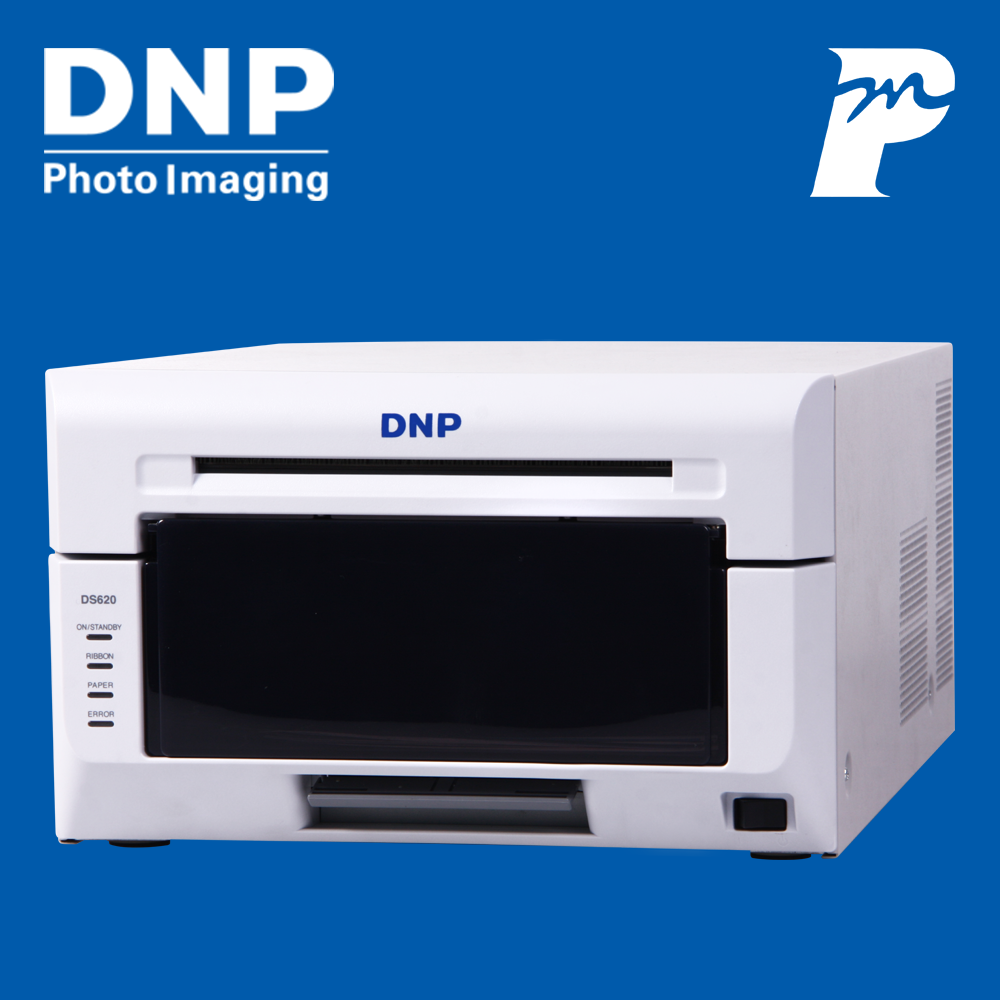
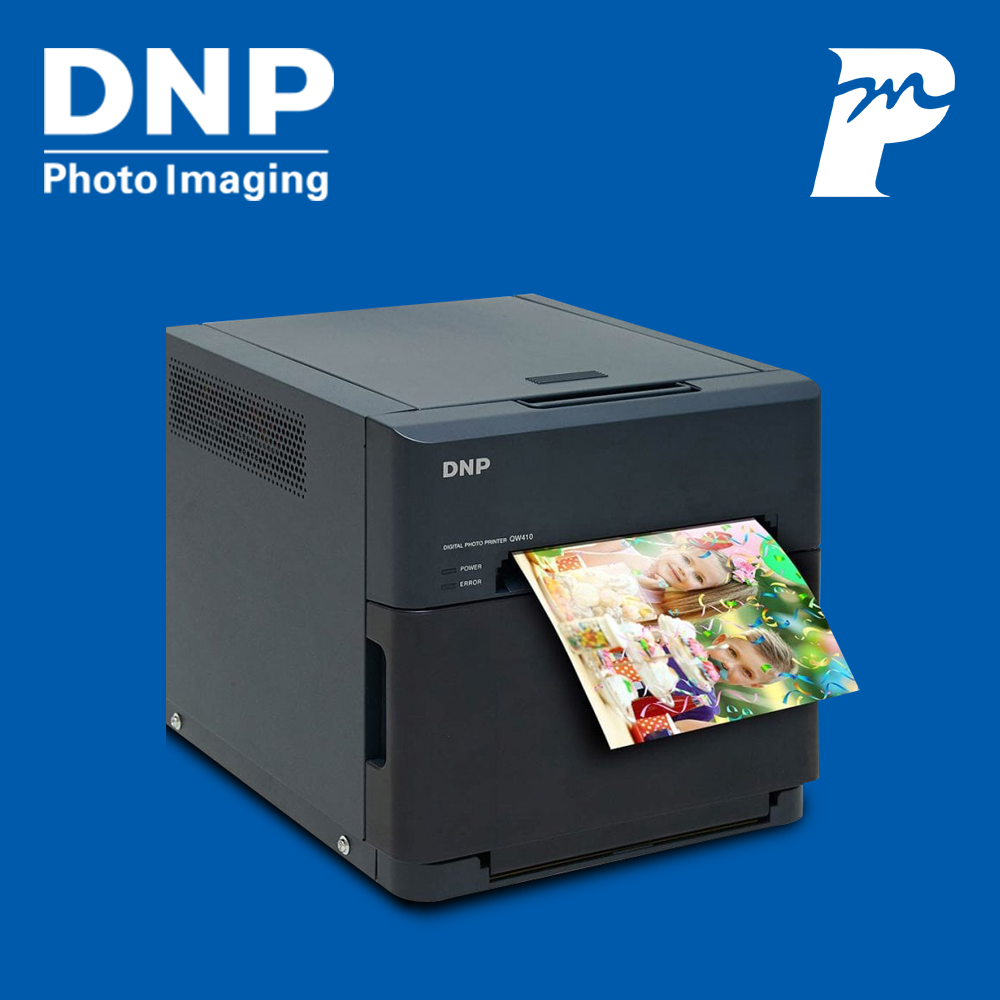
DNP's printer line-up for the European market is designed around real-world photographic workflows. Each model works as a complete system with DNP's matched media.


Did You Know? Eight Facts About DNP
A few things about DNP's history and technology that might surprise you.
1
DNP was founded eight years before the Eiffel Tower was built
Shueisha, the company that became DNP, opened in 1876. The Eiffel Tower was not completed until 1889. By then, DNP had already been printing for over a decade and had installed Japan's first private steam-powered presses.
2
DNP manufactures its own dye-sublimation ribbons and receiver papers
DNP is not just a printer brand. It also manufactures the ribbons and receiver papers that DNP printers use. This integrated approach means DNP can develop dedicated ICC colour profiles matched to specific media and printer combinations.
3
DNP began developing dye-sublimation technology in the early 1980s
At a time when digital photography was barely conceivable to most people, DNP's engineers were developing dye-sublimation thermal transfer printing media, making DNP one of the earliest organisations to pursue this technology.
4
A DNP print draws from a palette of over 16.7 million colours
With 256 intensity levels across cyan, magenta and yellow, a single DNP dye-sublimation print draws from more than 16.7 million distinct shades, rendered as a continuous, dot-free tonal gradation.
5
DNP acquired Sony Chemicals' thermal ribbon business in 2008
The 2008 acquisition brought together two established operations in TTR and dye-sublimation media manufacturing, expanding DNP's production capacity in thermal transfer media.
6
The DS-RX1HS produces up to 290 prints per hour
In high-speed mode on glossy media, the DS-RX1HS produces a 10x15 cm print in 12.4 seconds. A practical consideration for event photographers managing a queue of clients.
7
DNP switched its media packaging from plastic to paper in May 2024
DNP Photo Imaging Europe transitioned its media packaging away from plastic as part of its environmental commitments. The media range carries FSC certification (C184961), with ribbon spools from recycled materials.
8
DNP operates across 48 production sites with over 40,000 employees worldwide
DNP is a large diversified printing and coating technology business, operating across imaging, packaging, electronics and information technology from facilities in Japan, Malaysia, Europe and the Americas.
UK specialist distributor — DNP printers & media
Speak to our team today
We supply the full DNP European printer range and matched media to photographic studios, event photographers and photo retail businesses across the United Kingdom.
0208 527 6006


Recently Viewed
Recent Posts